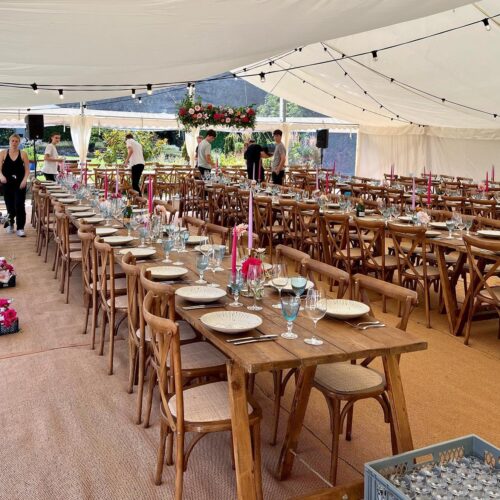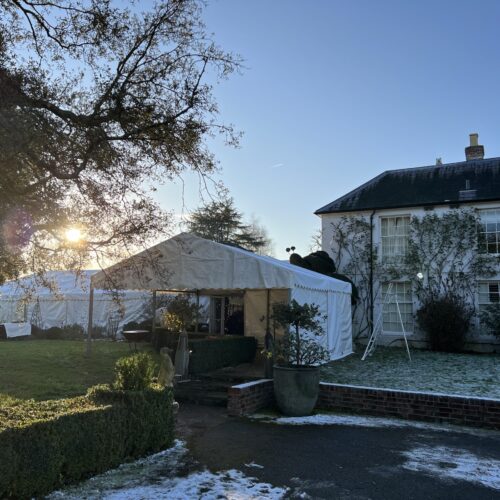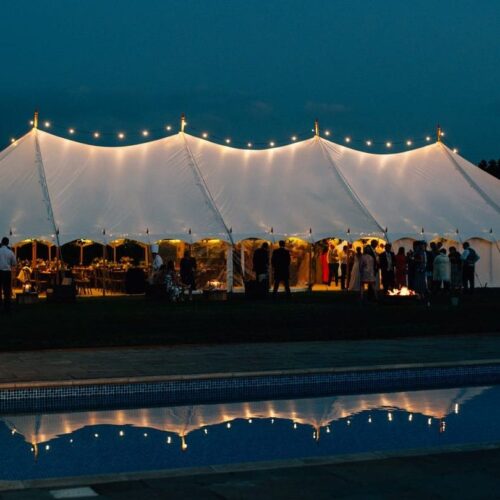
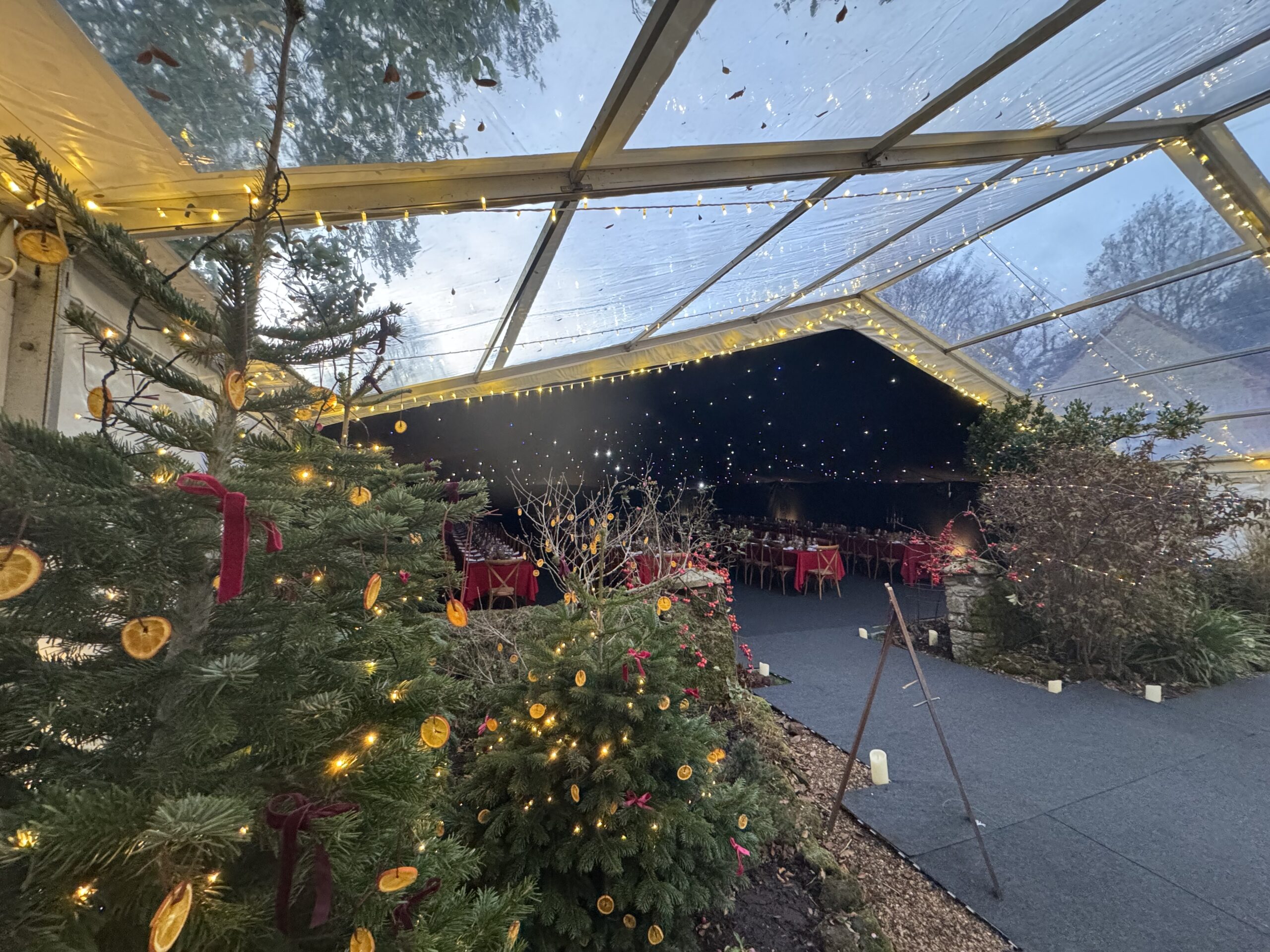
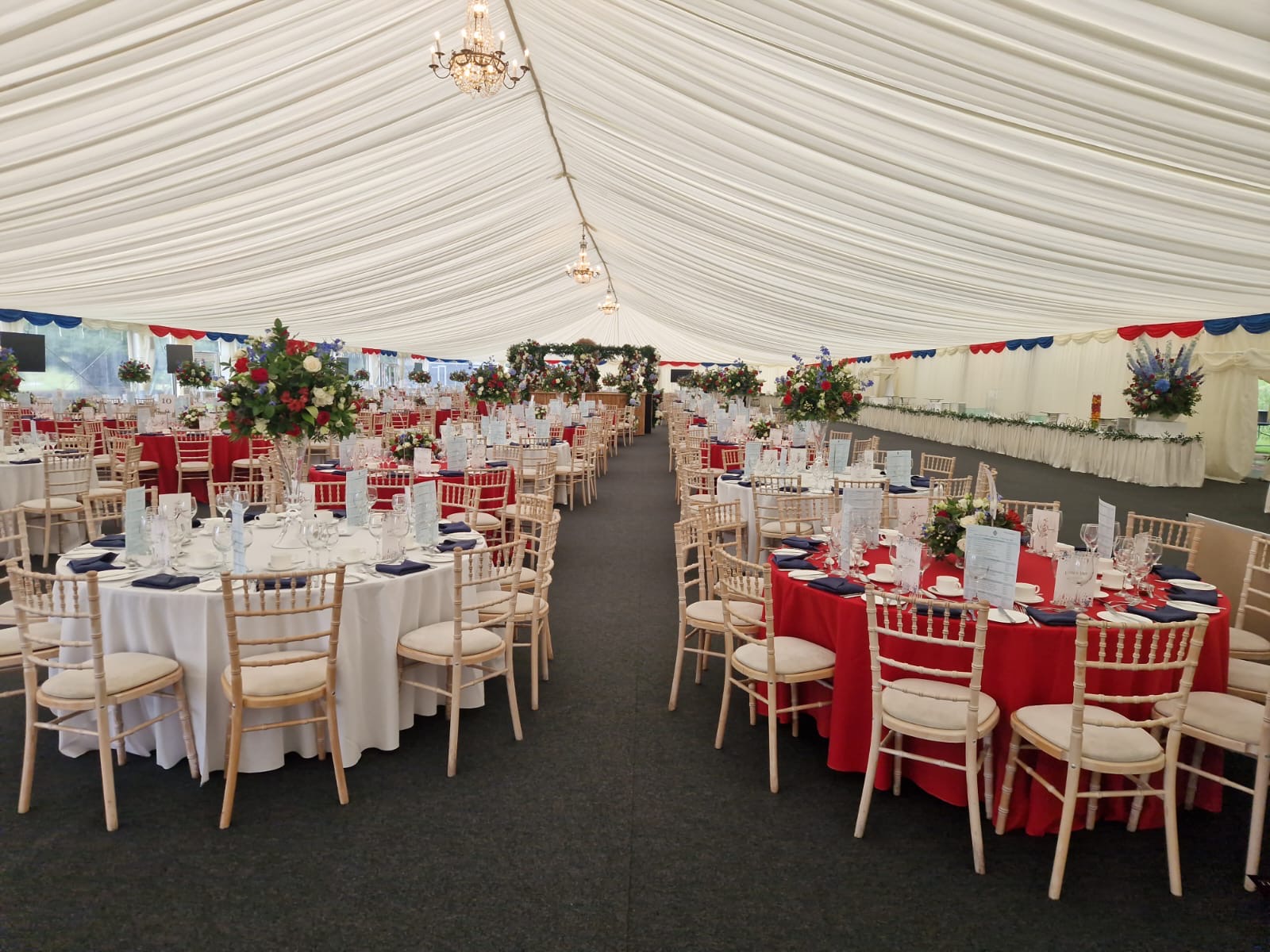
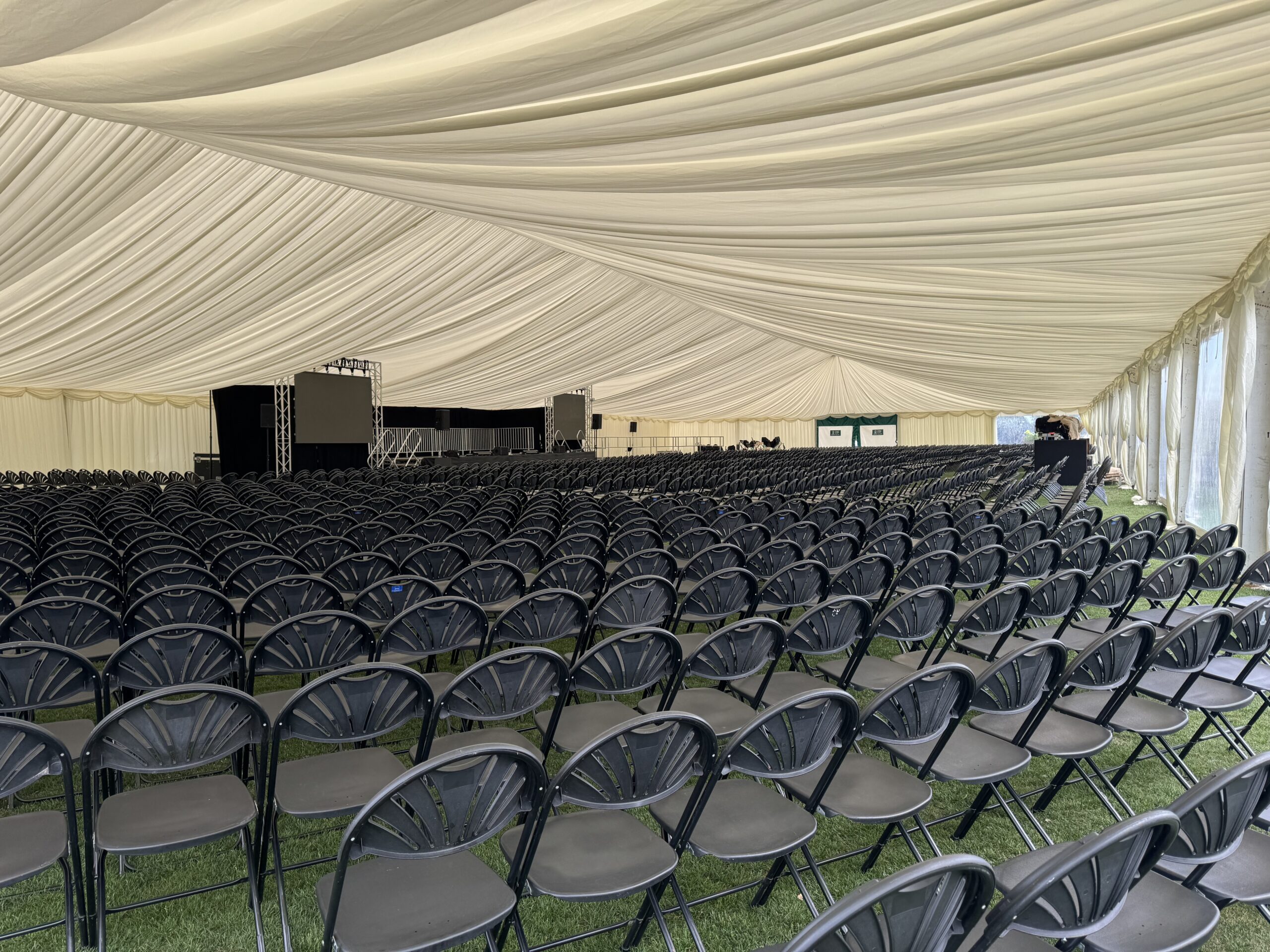
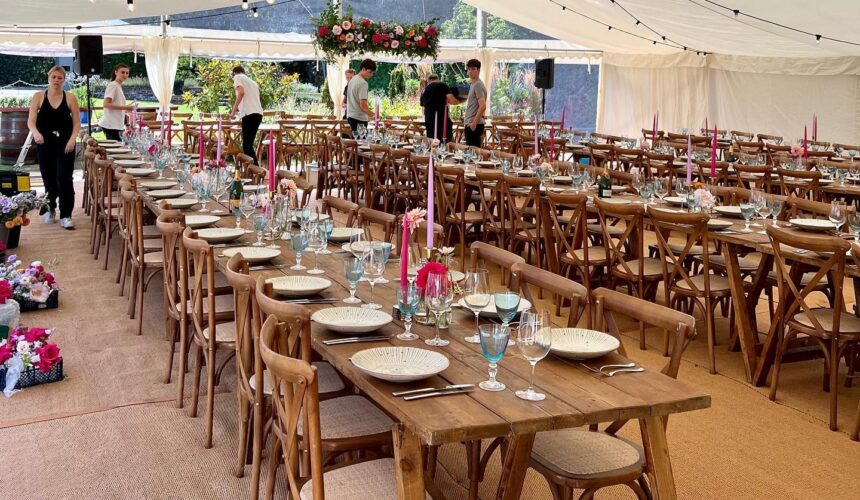
Planning an event can be an exciting process, but it often begins with a familiar frustration. You have the perfect location, a vision in mind, and a guest list full of people you want to impress, yet the space itself feels empty and uninspiring. A marquee can sometimes be seen as a purely practical solution rather than a design opportunity, leaving people unsure how to turn marquee interiors into something personal, stylish, and memorable.
At One Six Events, we see this challenge every day and it is exactly why we love what we do. With thoughtful marquee designs, carefully curated marquee interiors, and a collaborative approach to marquee hire, we help our clients transform open spaces into immersive environments that feel considered, welcoming, and entirely their own. Looking ahead to 2026, marquee interiors are evolving in exciting ways, and we are proud to be part of that evolution.
This blog explores the key design directions shaping marquee interiors for the coming year and how thoughtful marquee hire can elevate events of every scale.
Marquee Interiors as a Canvas for Modern Events
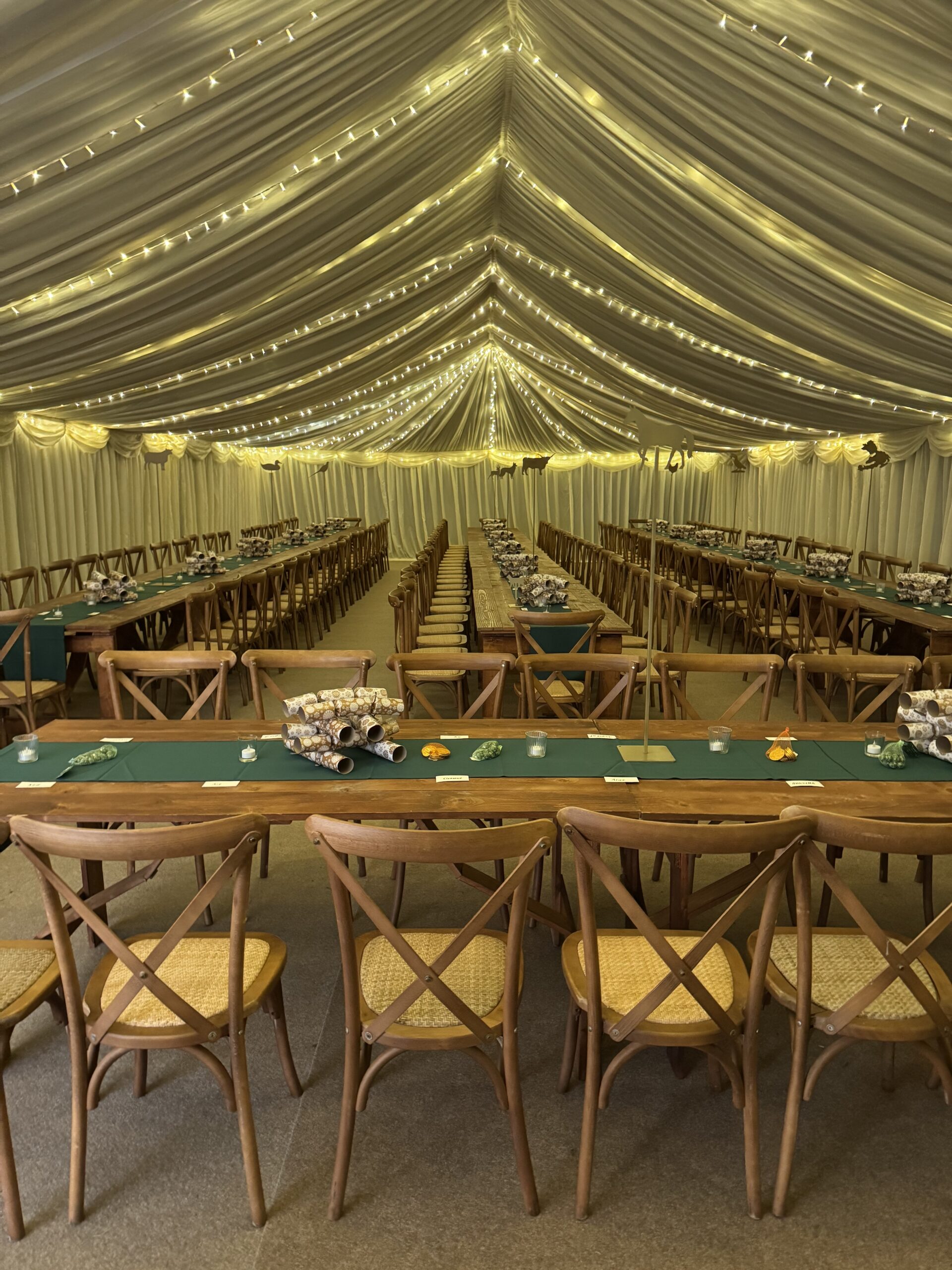
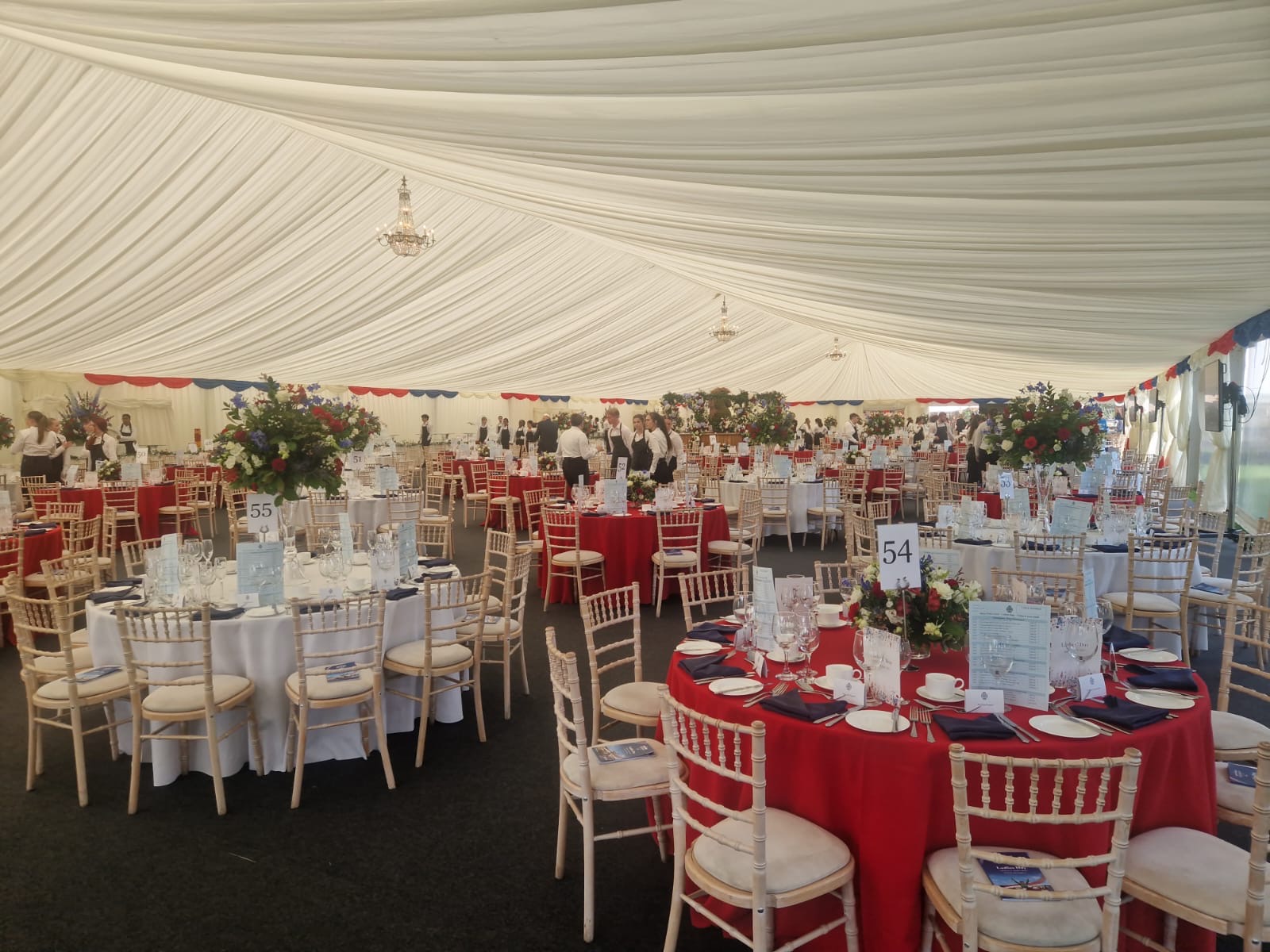
Marquees have moved far beyond their reputation as simple temporary structures. Today, marquee interiors are treated as blank canvases that allow complete creative freedom. Unlike fixed venues, marquee hire gives you control over layout, lighting, textures, and atmosphere from the ground up. This flexibility is driving a new era of marquee designs that feel intentional rather than improvised.
In 2026, clients are placing greater value on how a space feels as well as how it looks. Marquee interiors are expected to flow naturally, reflect personal style, and support the way guests move through an event. Whether it is a wedding, a private celebration, or a corporate gathering, the right marquee hire allows design and practicality to work together seamlessly.
1. Elevated Rustic Chic: Beyond Bunting and Bales
While the classic ‘rustic’ look remains popular, 2026 sees it becoming far more sophisticated and intentional.
Key Elements:
- Natural Textures: Think raw linen tablecloths, woven rattan furniture, and exposed wooden beams (if the structure allows).
- Deep, Earthy Tones: Moving past pastels, the palette includes deep moss green, burnt orange, terracotta, and rich burgundy.
- Artisan Lighting: Replacing standard uplighters are intricate chandeliers made from natural materials, pendant lights with exposed bulbs, and large, statement wicker lampshades that cast beautiful shadows.
- Subtle Florals: Florals are wilder and less structured—meadow-style arrangements using local, seasonal blooms, and plenty of foliage.
2. The Maximalist Manor: Bold and Beautiful
For couples and event planners wanting to make a dramatic statement, maximalism is back, offering a rich, layered, and deeply personal aesthetic.
Key Elements:
- Pattern Clashing: Mixing geometric, damask, and floral patterns across linens, wall drapes, and even floor coverings.
- Jewel Tones: Saturated colours are key—sapphire blue, emerald green, ruby red, and amethyst purple—often combined with metallic accents like gold and brass.
- Vintage Furniture: Incorporating mismatched velvet seating, antique sideboards, and heavy framed mirrors to create ‘living room’ zones within the marquee.
- Statement Ceilings: Using elaborate ceiling drapes in strong colours or patterns, perhaps with a focus on oversized installations like paper lanterns or cascading ribbons.
3. Sustainable Serenity: Eco-Conscious Elegance
Sustainability is no longer a niche choice; it is becoming a core consideration for marquee events. This trend focuses on responsible sourcing without sacrificing style.
Key Elements:
- Minimised Waste Decor: Prioritising decorations that are reusable, biodegradable, or locally sourced. This includes dried flower arrangements, potted plants, and paper goods.
- Upcycled Furniture: Using refurbished or vintage furniture pieces that tell a story, reducing the demand for new manufacturing.
- Organic Materials: Using hemp, jute, recycled glass, and natural wood finishes. The aesthetic is clean, light, and focused on material honesty.
- Focus on Light: Maximising natural light during the day and using solar-powered or low-energy LED lighting in the evening.
4. Sculptural Minimalism: Less is More, But Better
A stark contrast to maximalism, this trend is about precise, clean lines and focusing on singular, high-impact design elements.
Key Elements:
- Neutral Palette: The colour scheme is restrained, typically involving creams, whites, dove greys, and blacks, allowing the architecture and texture to speak.
- Geometric Shapes: Incorporating angular furniture, modern archways, and structured floral arrangements. Think sleek Perspex or metal furniture.
- Focused Lighting: Strategic, architectural lighting used to highlight key areas (the bar, the cake table) rather than general ambient light.
- Negative Space: The design intentionally leaves parts of the marquee open and uncluttered, creating a feeling of modern sophistication and space.
5. Immersive Zones: The Experiential Marquee
The 2026 marquee won’t be a single, uniform space. Instead, it will be cleverly sectioned off into distinct ‘zones’ offering different moods and experiences for guests.
| Zone Type | Purpose | Typical Decor/Features |
|---|---|---|
| Dining Hall | Formal seated dining, speeches | Elegant table settings, sophisticated lighting, clear sightlines. |
| Lounge & Chill | Relaxing, conversation, quiet retreat | Deep comfortable sofas, floor cushions, low ambient lighting, perhaps a bespoke cocktail menu. |
| Dancing & Party | High-energy entertainment | Professional sound system, dynamic lighting (LEDs, disco balls), bold backdrops. |
| Photo Moment | Interactive guest experience | Flower walls, neon signs, themed backdrops, 360-degree photo booth. |
These interior design trends for 2026 reflect a desire for events that are memorable, personal, and visually stunning. Whether you choose the rich layers of Maximalist Manor or the clean lines of Sculptural Minimalism, the modern marquee offers limitless possibilities for truly fashionable event design.